Closed Panel of the Research Centre RaT at the European Academy of Religion 2026
Religion in Dialogue. Transformations, Challenges, and Chances
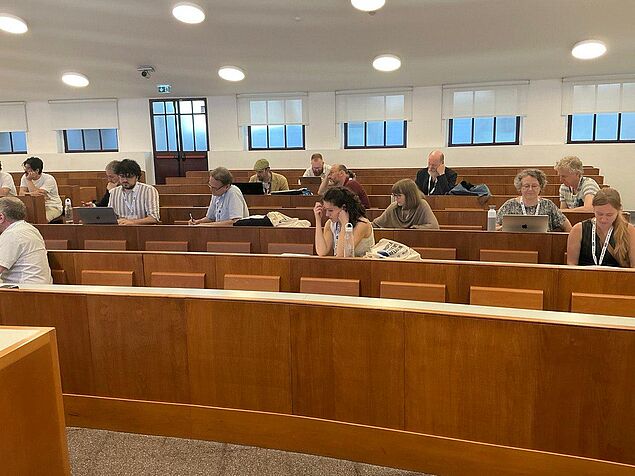
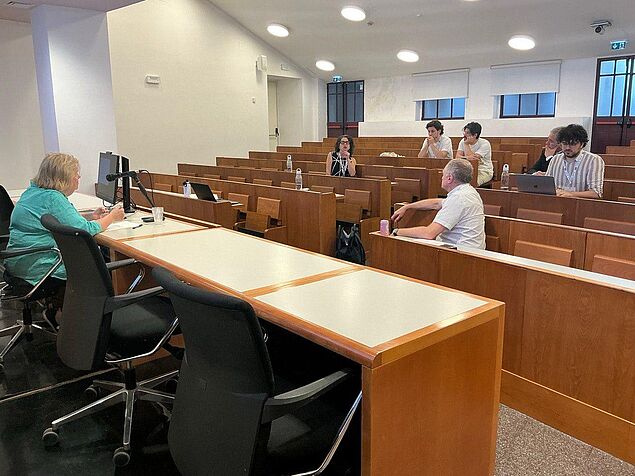
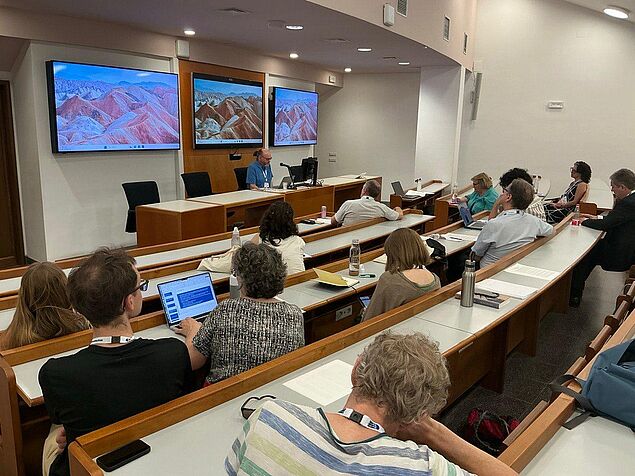
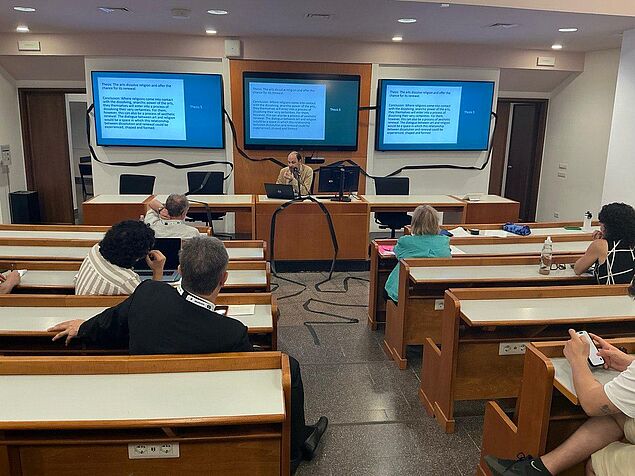
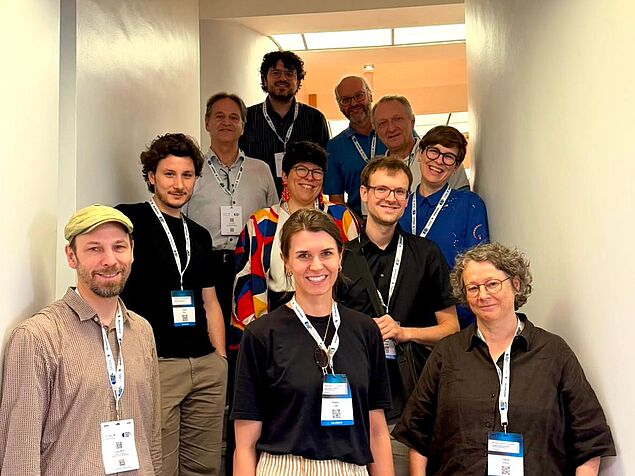
At the 2026 European Academy of Religion (EuARe) in Rome, the closed panel Religion in Dialogue: Transformations, Challenges, and Chances brought together twelve members of the Research Centre RaT from a range of disciplinary backgrounds for a two-day exchange on how dialogue can be understood as a transformative practice under contemporary social, political, ecological, and cultural conditions. Rather than limiting dialogue to interreligious exchange, the panel approached it as a broader engagement between religious and secular worlds, encompassing encounters with politics, the arts, the natural sciences, ecology, and critical theory. The contributions examined both the opportunities and the tensions that emerge where religious traditions interact with other forms of knowledge and practice.
The panel opened with Regina Polak's keynote lecture, which reflected on dialogue as a "witness-notion" of our catastrophic age. Against the backdrop of increasing polarization and global crises, she examined both the normative promise and the limitations of dialogue, emphasizing listening, openness to transformation, and the shared search for truth as indispensable conditions for genuine dialogical practice.
The first thematic section focused on religion in dialogue with the natural sciences and ecology. Franz Kerschbaum reflected on the historical relationship between astronomy, cosmology, and religious worldviews, illustrating how scientific and religious interpretations of the cosmos have continually influenced one another. Andreas Telser subsequently proposed extending the very notion of dialogue beyond human interlocutors, arguing for an "intercreational" dialogue that recognizes the wider created world as a meaningful partner in theological reflection.
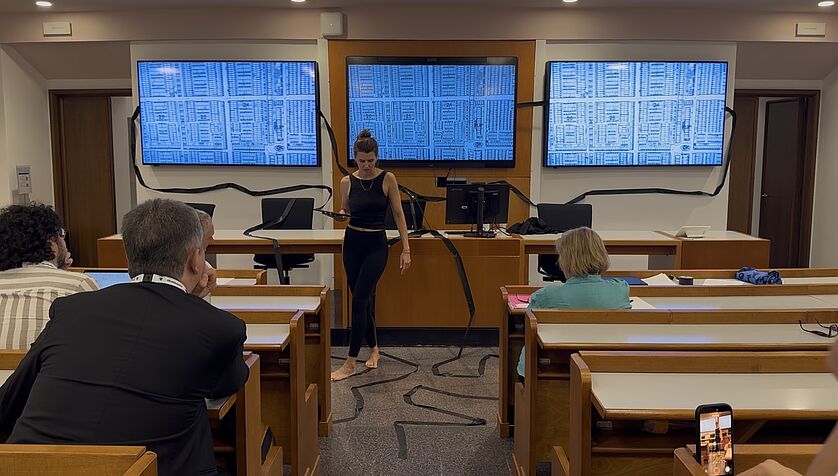
The dialogue between religion and the arts formed the second thematic focus. In a philosophical performance, Noemi Call explored the concept of the “ungiven” as a dialogical horizon, arguing that both aesthetic and religious experience unfold performatively through openness, exposure, and the suspension of conceptual closure. By enacting rather than merely describing the philosophical argument, the performance itself embodied the dialogical and performative mode it sought to investigate. Jakob Deibl complemented this perspective by examining the dialogue between art and religion in light of their autonomy in modernity. He argued that both fields must first be understood according to their own internal logic before meaningful dialogue can take place. His presentation explored whether such dialogue rests on a shared point of reference or whether it must continually be rethought in relation to concrete works of art and religious practices.
The section on Abrahamic dynamics addressed dialogue within and between religious traditions. Patrice Brodeur analyzed the profound challenges facing contemporary Abrahamic dialogue following the events of October 2023, highlighting the tensions between neocolonial and decolonial approaches as well as the resilience of long-established dialogical relationships. Tugrul Kurt turned to the late medieval exegete al-Biqāʿī, demonstrating how engagement with Biblical texts functioned as a hermeneutical practice within Qurʾanic exegesis and thereby offering historical perspectives on scriptural dialogue.
Questions of politics, education, and gender were addressed in the subsequent session. Katharina Limacher and Astrid Mattes examined interdenominational collaborations within traditionalist Christian educational networks in Austria, analyzing forms of cooperation often described as an "ecumenism of hate." In contrast, Sabine Grenz explored possibilities for alliance-building between secular and spiritual feminists, arguing that shared political concerns can create productive collaborations despite significant epistemological differences.
The final section approached religion through the lens of critique. Daniel Kuran examined how theology can participate critically in political discourse by rethinking sovereignty and distinguishing divine sovereignty from political power. Marco Fiorletta concluded the panel by bringing Hölderlin and Deleuze into dialogue, proposing the notion of caesura as a model for understanding critique not as the rejection of religion but as a transformative shift in perspective.